Kobadoo Emojis
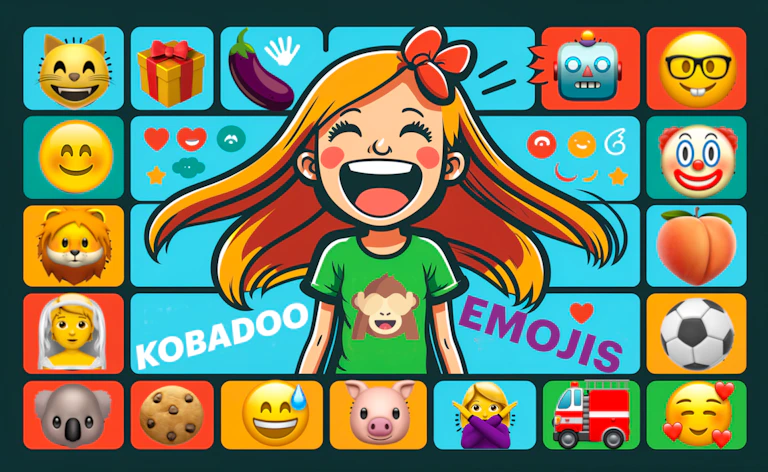
About Kobadoo Emojis
Kobadoo Emojis is a memory game with a single, honest mechanic: a sequence of emojis flashes on screen, and you repeat it back. Each success adds length to the next sequence, and somewhere between five and nine items you will discover exactly where your working memory tops out.
The emoji theming keeps it friendly — the faces and objects are easy to name in your head, which is genuinely part of the strategy — but the underlying exercise is the classic span task used in cognitive training. Children can enjoy it as a colorful pattern game while adults quietly treat it as brain calibration, and both end up chasing the same thing: one more item than last time.
There is no timer pressure during recall and no penalty pile-up, which makes it one of the more relaxed ways to genuinely strain your brain.
How to Play
Watch the emoji sequence carefully as it plays, then reproduce it in the same order by tapping the emojis. Get it right and the next round adds to the sequence; slip once and you learn precisely how long a chain you can hold. Naming each emoji silently as it appears — dog, star, pizza — is the trick that separates good scores from great ones.
Kobadoo Emojis Tips & Tricks
- Verbalize the sequence in your head as a little story; narrative glue holds more items than raw visual memory.
- Group items into chunks of two or three — remembering three pairs is easier than six singles.
- Recall at your own pace; rushing the tap-back phase causes more misses than weak memory does.
- Play a few rounds daily rather than many in one sitting if you are using it as memory practice.
Game Details
| Category | Casual |
|---|---|
| Platform | Web browser (desktop & mobile) |
| Released | February 1, 2022 |
| Desktop controls | Mouse — click emojis in the remembered order |
| Touch controls | Tap emojis in order |
| Technology | HTML5 |
| Playing | Free, no download |
Kobadoo Emojis FAQ
Is Kobadoo Emojis just for kids?
It is kid-friendly, but the difficulty scales with your own memory span, so adults hit a genuine challenge fast. Sequence-memory tasks like this one are the same format used in cognitive testing.
Does it really improve memory?
Practicing improves your performance at the task itself, and the chunking habits you build carry over to remembering lists in daily life. Claims beyond that would be overselling it.
What is a good score?
Most people manage sequences of five to seven items; holding nine or more consistently puts you well above average.