Kobadoo Numbers
About Kobadoo Numbers
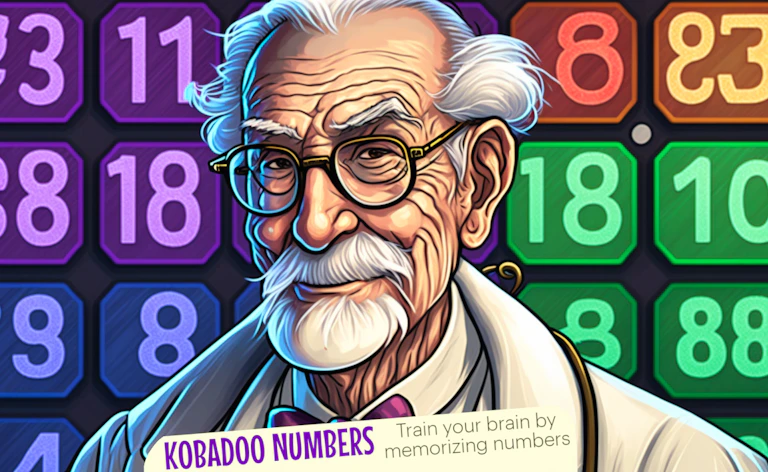
Kobadoo Numbers is a working-memory workout disguised as a minimalist game: sequences of two-digit numbers appear, you hold them in your head, and you enter them back in order. Every correct answer stretches the next sequence a little longer, mapping the exact edge of what your memory can carry.
Two-digit numbers make this noticeably tougher than letter or picture versions of the span task — 47 and 74 are cousins your brain loves to swap. That is precisely what makes it good training: the game forces you into deliberate memory strategies, and you can feel the difference between a lazy attempt and a focused, chunked one within a couple of rounds.
Sessions are short, the interface stays out of the way, and progress is brutally honest — there is no way to fake a longer memory span.
How to Play
Watch the number sequence as it appears, hold it, and re-enter the numbers in the same order. Success lengthens the next round's sequence; a miss shows you exactly which position collapsed. Chunking — reading 4 7 2 9 as forty-seven twenty-nine — is the single biggest upgrade you can make to your score.
Kobadoo Numbers Tips & Tricks
- Group digits into pairs and say them internally as full numbers — chunking is worth two or three extra digits of span.
- Attach quick meanings to numbers you recognize (a year, an age, a road) — meaning is memory glue.
- Middle items fall out first; give the middle of the sequence extra attention on long rounds.
- Treat it like exercise: a few focused minutes daily beats an occasional exhausting session.
Game Details
| Category | Casual |
|---|---|
| Platform | Web browser (desktop & mobile) |
| Released | February 15, 2022 |
| Desktop controls | Mouse or keyboard to input the remembered numbers |
| Touch controls | Tap the numbers in order |
| Technology | HTML5 |
| Playing | Free, no download |
Kobadoo Numbers FAQ
How is this different from Kobadoo Emojis?
Same span-task format, harder material — two-digit numbers are more confusable and less visual than emojis, so most people's number span runs shorter. It is the version for players who want the strict workout.
What is a good sequence length?
Holding five to seven two-digit numbers is solid; consistent recall beyond that is genuinely uncommon and usually means your chunking technique is working.
Does practicing transfer to daily life?
The chunking and attention habits do — phone numbers, codes and lists get noticeably easier. Broader claims about intelligence would be marketing, not science.